
TRUSS DESIGN PROJECT
Goals
- Focused on minimizing cost and maximizing load capacity through a data-driven truss design at highest load-cost ratio possible.
- Use a custom analysis program to test multiple configurations, select a design that balances rigidity and efficiency with medium-length members.
- Emphasize reducing bending and improving structural integrity, applying real-world engineering principles to achieve an optimized, test-ready truss.
Role
- Head of structural analysis and design calculations (with Statics equations)
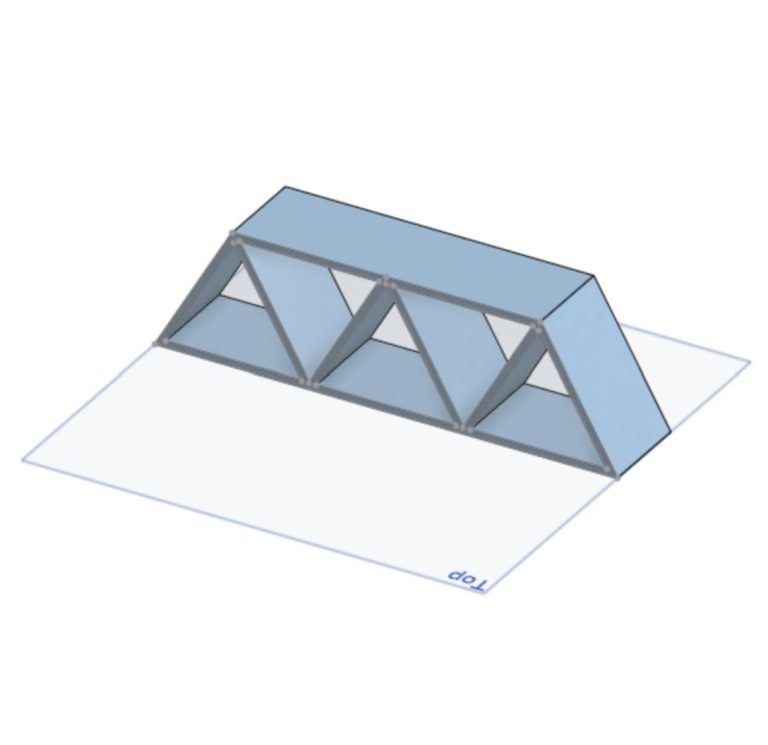
- Head of design modeling
- Helped with building Truss
Timeline
January 2025 - May 2025
Tools
- MATLAB
- SolidWorks
Results
- Developed an optimized truss design achieving a 45.24-ounce load capacity at a total cost of $183.67, resulting in a load-to-cost ratio of 0.1742 oz/USD.
- Utilized computational analysis to identify member 8 as the critical failure point, predicting buckling at 34.8 ounces of internal force, with an uncertainty of ±1.35 ounces. This insight guided precision-focused construction practices to mitigate structural weaknesses.
- Validated the analytical model through design iteration and cost optimization, demonstrating strong correlation between simulated and expected physical performance.
- Implemented calculation-driven design decisions that reduced material waste and improved load distribution, confirming the effectiveness of computer-aided structural optimization in maximizing strength-to-cost performance.
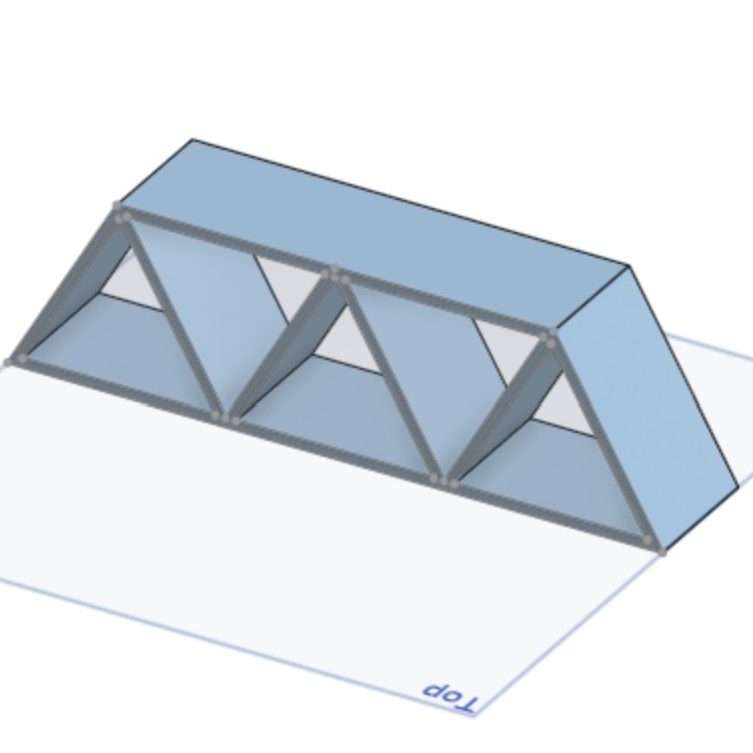
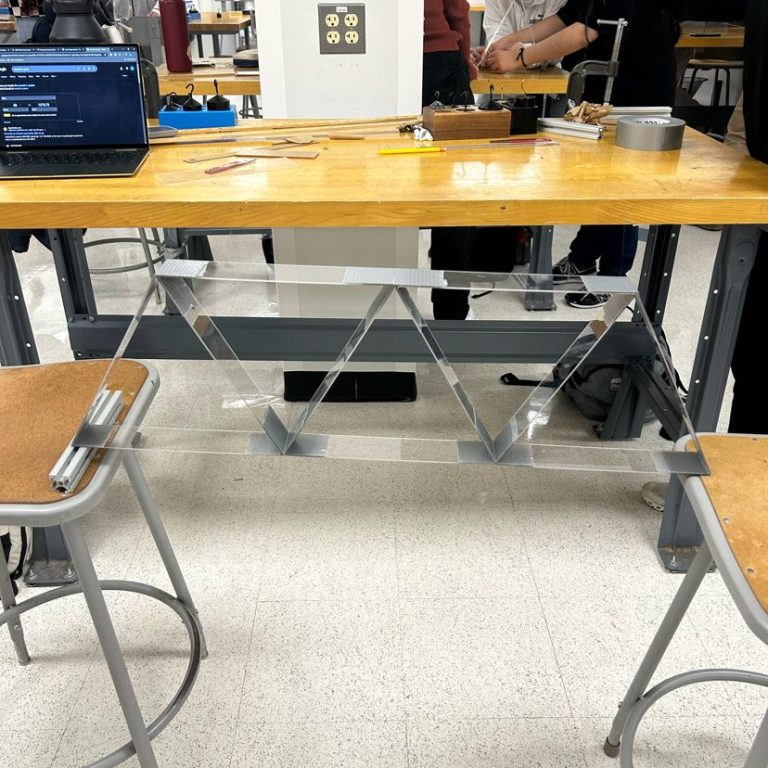
Design Process
Originally, our truss concepts were developed through manual sketches and iterative testing. We transitioned the process to a computational optimization approach, using a custom analysis program to evaluate geometry, material cost, and load performance. This enabled data-driven decision-making and eliminated the need for repeated hand-written analysis during early design stages.
The project required a 31-inch truss capable of supporting a two-pound load for at least sixty seconds, with a roller and pin joint meeting strict geometric and cost constraints. Through code-based simulations, we tested multiple configurations and selected a design.
By integrating analytical uncertainty from buckling tests directly into our calculations, the design process ensured both accuracy and reliability, resulting in a truss optimized for strength, efficiency, and manufacturability.
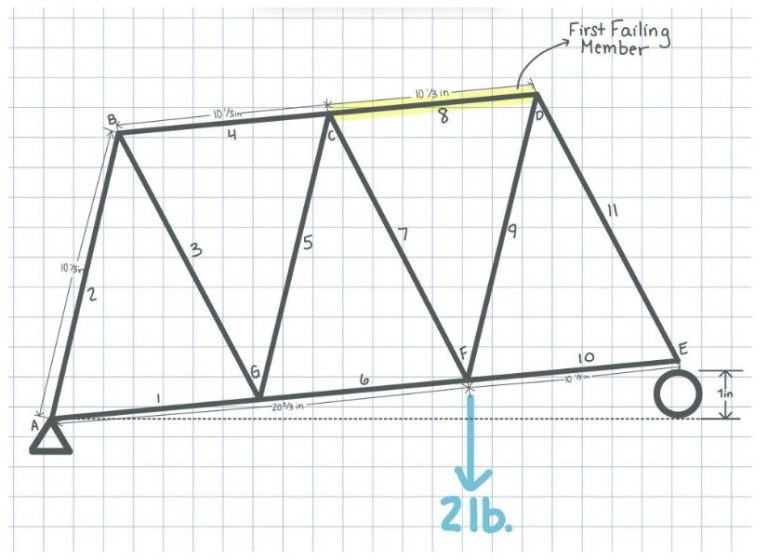
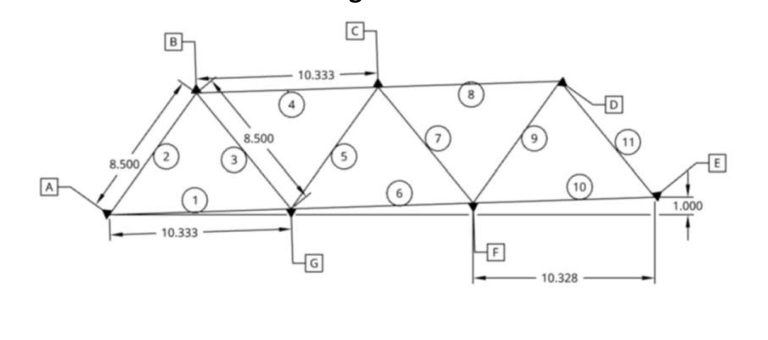
Results
- Truss with a 45.24 oz load capacity.
- Total cost of $183.67, resulting in a load-to-cost ratio of 0.1742 oz/USD.
- Buckling began at 34.8 oz.